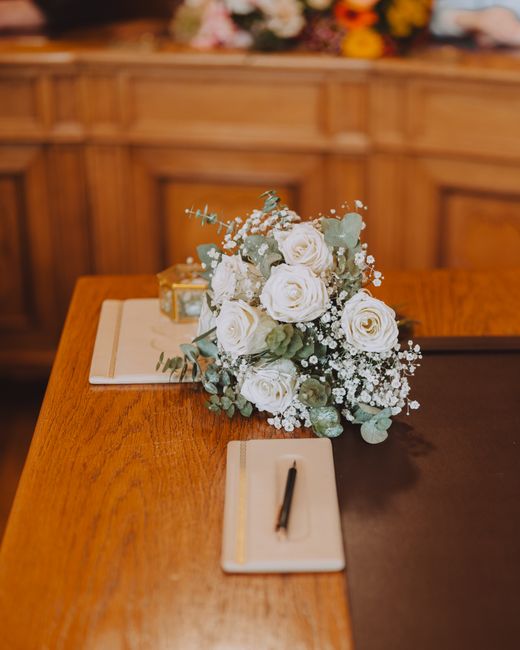
Permits and rules for wedding flowers at Harrow parks
Posted on 13/10/2026
Planning wedding flowers for a park ceremony sounds simple at first glance. Then you start asking the real questions: can you place an arch on the grass, do petals need permission, what about a floral aisle runner, and who do you speak to if your chosen Harrow park has its own restrictions? The answer is usually less dramatic than people fear, but it does need a bit of care. Permits and rules for wedding flowers at Harrow parks are there to protect the park, keep other visitors safe, and make sure your day runs smoothly.
In this guide, we'll walk through how park rules usually work in Harrow, what tends to require approval, and how to plan floral decor without last-minute stress. You'll also find practical tips, a comparison table, a checklist, and a real-world example to help you make good decisions. Truth be told, a little early planning saves a lot of awkward phone calls later.
Table of Contents
- Why Permits and rules for wedding flowers at Harrow parks Matters
- How Permits and rules for wedding flowers at Harrow parks Works
- Key Benefits and Practical Advantages
- Who This Is For and When It Makes Sense
- Step-by-Step Guidance
- Expert Tips for Better Results
- Common Mistakes to Avoid
- Tools, Resources and Recommendations
- Law, Compliance, Standards, or Best Practice
- Options, Methods, or Comparison Table
- Case Study or Real-World Example
- Practical Checklist
- Conclusion
- Frequently Asked Questions
Why Permits and rules for wedding flowers at Harrow parks Matters
Park weddings can be beautiful, but parks are public spaces first. That means the same green space that feels like your dream ceremony backdrop may also need to stay open, tidy, and safe for dog walkers, families, joggers, and other visitors. Wedding flowers can affect all of that more than people expect.
If you're planning floral features such as a ceremony arch, aisle petals, table arrangements for an outdoor reception, or larger installations tied to a photoshoot, park permissions may come into play. Some parks are happy with light-touch decor. Others may limit anything fixed to trees, structures, benches, railings, or turf. It depends on the park, the council, and the type of setup.
This matters because a wedding morning is not the moment to discover that the florist can't install the arrangement you've spent weeks choosing. Nor is it ideal to learn that loose petals are not allowed after the registrar has already arrived. A few questions earlier on can prevent a lot of scrambling later. And yes, the weather in London always likes to have a say too.
There's also a practical side. Clear rules help your florist plan the right mechanics, the right timing, and the right materials. If your design has to be freestanding rather than attached, or if fresh petals need a containment plan, that changes the brief. Done well, the result is still lovely. Often lovelier, actually, because it's properly thought through.
How Permits and rules for wedding flowers at Harrow parks Works
In most cases, the process is a mix of venue permission, park management approval, and florist coordination. The exact route varies depending on whether the park is managed by a local authority, has a separate events team, or sits alongside a licensed wedding venue within park grounds.
Here's the basic shape of how it tends to work:
- Identify the exact park area you want to use, not just the park name generally. Rules can differ between lawns, shelters, formal gardens, lakeside spaces, and sheltered corners.
- Check whether the ceremony itself is licensed or informal. If there's an official ceremony space, floral arrangements may be handled differently than a simple photo area.
- Ask what floral items are allowed. This can include bouquets, buttonholes, table flowers, freestanding arches, garlands, petals, baskets, and aisle arrangements.
- Confirm whether a permit or booking reference is needed. Some parks ask for written approval, even when the floral setup is small.
- Share the rules with your florist early. Good florists can adapt. They just need the heads-up before they start designing.
- Plan setup and removal times. Parks often care just as much about when things go in and come out as they do about the design itself.
One thing people often miss: not all "decor" is treated the same. A bouquet is usually straightforward. A tied arrangement on a chair, a confetti-style petal trail, or anything that touches living trees or public fixtures is more likely to need approval. In some parks, even reusable flower stands must be positioned carefully so they do not block pathways or damage grass.
If you're also arranging the flowers themselves through a local florist, it helps to choose a shop that understands wedding logistics, not just pretty arrangements. You may find useful local support through wedding flowers in South Harrow or the broader South Harrow florist service if you want a team that already works with wedding deliveries and timing.
Key Benefits and Practical Advantages
At first, permits can feel like paperwork for paperwork's sake. But once you look at the moving parts, the benefits are obvious.
- Fewer surprises on the day - You're less likely to get stopped by staff or have to redesign plans in a hurry.
- Better floral design - Knowing the rules allows your florist to choose the right mechanics, blooms, and display style.
- Less waste - You only order what you can actually use in the space, which is kinder to your budget and the environment.
- Safer guest flow - Clear rules reduce tripping hazards, blocked pathways, and clutter near popular park routes.
- Respect for the venue - Parks are shared spaces. Leaving them tidy and undamaged reflects well on everyone involved.
There's a quiet advantage too: once the rules are clear, you can relax into the creative part. Picking flower colours, ribbon textures, and seasonal blooms becomes enjoyable again instead of slightly tense. That shift matters. Weddings are full of small decisions, and any area you can simplify is a blessing.
For couples looking to keep things elegant but manageable, a lighter floral approach often works beautifully in park settings. If you want inspiration for styles that are easy to adapt to public spaces, browse options like bridal bouquets, buttonholes, or table arrangements. Those categories are often easier to tailor to venue rules than larger fixed installations.
Who This Is For and When It Makes Sense
This topic matters to anyone planning a wedding in or around a Harrow park where flowers will be visible beyond a simple handheld bouquet. That might be a couple, a wedding planner, a florist, a family organiser, or a venue coordinator trying to keep everything neat and compliant.
You probably need to think about permits and rules if any of the following apply:
- You want a ceremony or vow exchange in a park setting.
- You're planning a floral arch, gazebo dressing, or backdrop.
- You want petals on the ground, on seats, or as part of an aisle design.
- You're using park grounds for photos and want floral props.
- Your florist needs vehicle access, setup time, or a safe unloading point.
- You're combining park flowers with nearby reception styling.
If your flowers are limited to bouquets, buttonholes, corsages, and handheld pieces, your planning may be simpler. Still worth checking, though. Small details can trip people up. For example, a florist arriving with a tall arrangement may need a different access route than expected, especially if parking is tight on a busy weekend.
It also makes sense for couples using a wedding package or combining multiple floral items across the day. A bouquet from one source, table flowers from another, and park decor from a third can become messy if nobody is managing the timing. A single florist who understands the whole flow can save you a lot of back-and-forth.
Step-by-Step Guidance
Here's a practical way to handle wedding flowers in Harrow parks without overcomplicating it.
1. Confirm the exact park location
Start with the precise setting. Is it a park lawn, a formal garden, a pavilion area, or a specific ceremony zone? Different parts of the same park may have different rules. A general "yes" for the park does not always mean "yes" for every feature.
2. Ask what is allowed and what needs permission
Ask directly about floral arches, freestanding displays, petals, candles near flowers, ribbons, and any items that touch the ground or structures. Keep your questions simple and specific. "Can we have flowers?" is too broad. "Can we place a freestanding flower arch on the ceremony lawn for 45 minutes?" gets you a much better answer.
3. Check timing rules
Many parks care about setup and removal windows. If your florist arrives too early, they may not be allowed to start. If they run late, the next park user or event may be affected. Build in a buffer. Always. London traffic can be a bit cheeky, especially on a wedding Saturday.
4. Decide on the floral format
Choose designs that suit the space and the permissions you have. If fixed installations are restricted, use portable stands, hand-tied arrangements, and table pieces that can be moved quickly. If petals are not allowed, ask your florist for a contained alternative, like a floral runner or basket display.
5. Brief your florist clearly
Give your florist the exact park name, location, access rules, and any constraints about attaching flowers, using tape, pinning, or placing items on grass. A florist working blind may choose the wrong structure, and that's where headaches begin.
6. Prepare a fallback plan
Even with the best planning, weather or access can change. A calm backup option, such as a simpler bouquet-led design or a freestanding arrangement, can rescue the day. It's not glamorous, but it is smart.
7. Confirm removal responsibilities
Find out who removes the flowers, by when, and where they go afterwards. This matters for both compliance and courtesy. Some parks are relaxed about it. Others are not. Better to know in advance than to hear about it in passing while everyone is trying to smile for photos.
Expert Tips for Better Results
After seeing a lot of wedding plans come together, a few patterns stand out. The couples who stay calm usually do a handful of things well.
- Keep the design grounded in the space. A big floral statement can be gorgeous, but it should fit the scale of the park area.
- Use structures that are easy to move. Freestanding pieces are often easier to approve than anything attached to park fixtures.
- Choose seasonal flowers where possible. They tend to look fresher and behave better in changeable weather.
- Ask about wind. Really. A lovely arch can become a wobbling nuisance if it's not weighted properly.
- Plan for public visibility. People may be walking past while you set up, so keep cables, water containers, and packaging out of sight where possible.
Here's a small but useful one: if you want the flowers to photograph well in soft outdoor light, ask your florist to think about colour contrast. Pale florals against bright summer grass can look elegant, but they can also disappear a bit in full sun. A touch of greenery or a slightly deeper tone can help.
And don't forget the practical magic of a simple bouquet. Not every park wedding needs a dramatic floral sculpture. Sometimes the most memorable look is a clean bridal bouquet, a few coordinated buttonholes, and one well-placed arrangement at the ceremony point. Clean. Calm. Lovely.
Common Mistakes to Avoid
Most issues come from assumptions, not bad intentions. A few of the common ones are easy to avoid if you know what to look for.
- Assuming park rules are the same everywhere - They usually are not. One area may allow more than another.
- Booking flowers before checking permissions - That can leave you with a design that does not fit the site rules.
- Forgetting setup access - A florist may need directions, parking info, or a clear unloading point.
- Using delicate arrangements outdoors without a backup - Wind and sun are not always kind.
- Leaving removal too vague - Someone needs to own that job.
- Overloading the space - More flowers do not automatically mean a better look, especially in a public setting.
The tricky bit is that a rule may sound minor until you're standing there on the day. No one wants to cut ribbon off a railing five minutes before the ceremony. Or explain to guests why the petals are suddenly in the car boot. It happens. Not often, but enough.
Another quiet mistake is not telling the florist what the park actually looks like. A picture helps more than a paragraph. If you can send the ceremony spot, the path from the car park, and the place where guests will gather, the florist can spot problems early. That little bit of visual context is gold.
Tools, Resources and Recommendations
You do not need a huge toolkit, but a few practical items make park flower planning much easier.
- A site photo set - Front, side, access route, and ceremony spot.
- A simple layout sketch - Even a hand-drawn one is useful.
- Timing notes - When the florist can arrive, when the ceremony starts, and when everything must be cleared.
- Permissions record - Keep emails or written approvals together.
- Weather backup plan - Especially if floral structures are involved.
If you're comparing floral styles, it can help to view wedding categories in a more structured way. For example, traditional bridal styling options, coordinated bridesmaid bouquets, and matching wedding collections are often easier to adapt than one-off designs. You might find it useful to compare wedding collections, bridesmaid bouquets, and wedding corsages while you map out the full day.
For broader support, useful pages on delivery, flower care, and guarantees can help you understand what happens before and after the wedding flowers arrive. That matters more than people think, especially if you're collecting pieces at different times or asking for a timed drop-off.
- delivery information
- flower care guidance
- service guarantees
If you are working to a budget, that is fine too. Park weddings do not need to be overloaded with flowers to feel special. A focused design often looks more polished than a crowded one. Honest truth.
Law, Compliance, Standards, or Best Practice
Because this topic involves public land, the key principle is simple: do not assume permission. Park rules are usually shaped by local management policies, event bookings, safety requirements, and public access obligations. That means the right approach is to check in advance and keep everything in writing where possible.
Best practice usually includes the following:
- Respect public access - Decorations should not block paths, entrances, or general use areas.
- Avoid damage - Nothing should harm trees, turf, walls, railings, or benches.
- Keep setups safe - Flower stands, water containers, and support frames should be stable.
- Remove everything on time - Leave the park as you found it, or better.
- Use fire and weather awareness - Even decorative items can become hazardous if conditions change.
In the UK, it's also wise to think about general event safety and public liability expectations, even when the floral setup is modest. If a florist is bringing equipment, there should be a clear understanding of who is responsible for what. That's not being fussy; that's just sensible.
Where the rules are unclear, ask for clarification rather than trying to improvise. A quick written confirmation can spare everyone a headache. And if the park says no to a particular floral feature, take it seriously. It's easier to adapt the design than to debate the rule on the day.
Options, Methods, or Comparison Table
Different floral setups suit different park settings. Here's a simple comparison to help you choose the right approach.
| Floral option | Typical permit need | Best for | Main watch-out |
|---|---|---|---|
| Handheld bouquets | Usually low | Bridal party, photos, simple ceremonies | Weather, transport, freshness |
| Buttonholes and corsages | Usually low | Guest coordination, elegant finishing touches | Timing and storage before the ceremony |
| Table arrangements | Sometimes moderate | Outdoor receptions or picnic-style setups | Stability and clearing after use |
| Freestanding arches | Often higher | Main ceremony focal point | Weighting, access, wind, and footprint |
| Petal scatter or floral aisle detailing | Varies a lot | Romantic ceremony styling | Cleanup rules and ground protection |
If you are unsure which route suits your park location, the safest path is usually the simplest one. That does not mean boring. It means controllable. A neat bouquet, a tasteful backdrop, and well-chosen buttonholes can still look beautifully finished without taking on too much risk.
Case Study or Real-World Example
Here's a realistic example from the kind of planning couples often do around Harrow.
A couple wanted a late-spring ceremony in a park setting with a floral arch, matching bouquets, and small table arrangements for a nearby drinks area. The first version of the plan looked lovely on paper, but the arch was too large for the access path and would have needed more setup time than the park window allowed. They also wanted petals scattered down the aisle, which needed checking.
After confirming the park guidance, the florist simplified the design. The arch was replaced by two freestanding floral pillars, which were easier to place and remove. The aisle became a clean pathway with hand-tied posies at the ends of seating rows. The table flowers stayed low so guests could still talk across them. Nothing felt compromised. If anything, the final setup looked more elegant because it was calmer and better balanced.
By the time the ceremony started, the flowers sat neatly in the soft outdoor light, and the whole thing felt easy. No one was rushing. No one was apologising to park staff. That matters. Small logistical wins make a wedding day feel smooth, and smooth is underrated.
The couple later said the best decision was asking the awkward questions first. Fair enough. Awkward questions are often the useful ones.
Practical Checklist
Use this before you finalise your wedding flower plan for a Harrow park.
- Confirm the exact park area and ceremony spot.
- Ask which floral items are allowed.
- Check whether written permission or a permit is required.
- Confirm setup and removal times.
- Share access details with your florist.
- Ask about restrictions on petals, tape, stakes, or attachments.
- Plan for wind, rain, and heat.
- Choose designs that suit the space.
- Keep a copy of approvals and contact names.
- Decide who clears the flowers after the event.
Quick takeaway: the best wedding flower plans for park settings are the ones that look beautiful, follow the park's rules, and can be set up and removed without stress. That balance is the sweet spot.
Conclusion
The rules around wedding flowers in Harrow parks are not there to make life difficult. They exist to keep the space safe, respectful, and workable for everyone using it. Once you understand the permit side of things, the whole process becomes much easier to enjoy. You can choose flowers with confidence, brief your florist properly, and avoid those last-minute scrambles nobody wants on a wedding morning.
The real win is simple: when permissions, timing, and design all line up, the flowers do their job beautifully. They frame the day without getting in the way. And that's usually exactly what you want.
If you are still shaping your floral plan, now is the right time to check your options, confirm the park rules, and choose arrangements that suit both the setting and the season.
Get a free quote today and see how much you can save.
With the right planning, your park flowers can feel effortless, elegant, and wonderfully yours.
Frequently Asked Questions
Do I need a permit for wedding flowers in Harrow parks?
Not always, but you should never assume. Small handheld flowers may not need anything formal, while larger setups such as arches, petals, or decorated structures often need permission. Check the exact park area before you book.
Can I scatter flower petals in a park ceremony area?
Sometimes, but not everywhere. Petals can create cleanup and slip issues, so they may be restricted or need approval. Ask whether loose petals are acceptable or whether a contained floral runner would be safer.
Are flower arches allowed in public parks?
They can be, but the park may ask for details about size, placement, weight, and removal. Freestanding arches are usually easier to approve than anything fixed to a tree, fence, or bench.
Who should arrange the permit, me or the florist?
Usually the couple or event organiser should take the lead, but a florist can help with practical details. The important thing is that everyone uses the same approved plan.
What happens if the weather changes on the day?
That's where a backup plan helps. Outdoor floral designs should be stable and easy to move if needed. A good florist will suggest materials and structures that cope better with wind or light rain.
Do buttonholes and bridal bouquets need park approval?
Usually not, because they are handheld and low impact. Still, if your ceremony is being held in a managed park space, it's wise to confirm any local rules that might affect the wider event.
Can I decorate park benches or trees with flowers?
Often this is restricted. Attaching items to public fixtures can cause damage or conflict with park rules. Freestanding arrangements are usually the safer choice.
How far in advance should I check the rules?
As early as possible. Ideally, check before finalising your floral designs. That gives you time to adjust sizes, materials, and installation plans without pressure.
What kind of flowers work best in a park setting?
Seasonal, sturdy blooms tend to work well outdoors. Your florist may suggest designs that hold shape better in mild wind and daylight. Roses, lisianthus, alstroemeria, and mixed seasonal arrangements are often practical choices, depending on the look you want.
Can I use a florist delivery service for park wedding flowers?
Yes, and it is often the easiest option. A timed delivery helps with freshness and reduces the chance of you having to transport delicate flowers yourself. Just make sure the florist knows the exact access point and timing.
What should I do if the park says no to my original floral plan?
Stay flexible. Swap fixed pieces for freestanding ones, reduce the footprint, or simplify the design. A good wedding florist can usually adapt the look without losing the feeling you wanted in the first place.
Are there budget-friendly ways to do wedding flowers in a park?
Yes. Focus on the key visual moments rather than decorating everything. A bouquet, a few buttonholes, and one strong ceremony arrangement can look polished without becoming expensive or hard to manage.